

Most people who love chess don't only meet the game across sixty-four squares. It shows up in how they dress, what sits on their desk, what they hang on their wall, what they carry with them without thinking twice about it. A chess lapel pin on a blazer, a chess backpack pin on a strap, a chess cap pin on the brim — small, wearable signals of a hobby that isn't confined to game time. Chess, for the people who really live it, is closer to a quiet identity.
That's the idea we keep coming back to at ChessboArt: chess belongs in real spaces, not only on the board. A board on the wall, a clock that still ticks, a small pin on a lapel — these are the objects that let the game follow a person through their day, instead of waiting for them in a drawer until the next match.
Here's what that looks like in practice — a few of the objects, across very different price points, that we think earn a place in a chess life.
An Enamel Chess Pin, Worn Rather Than Displayed
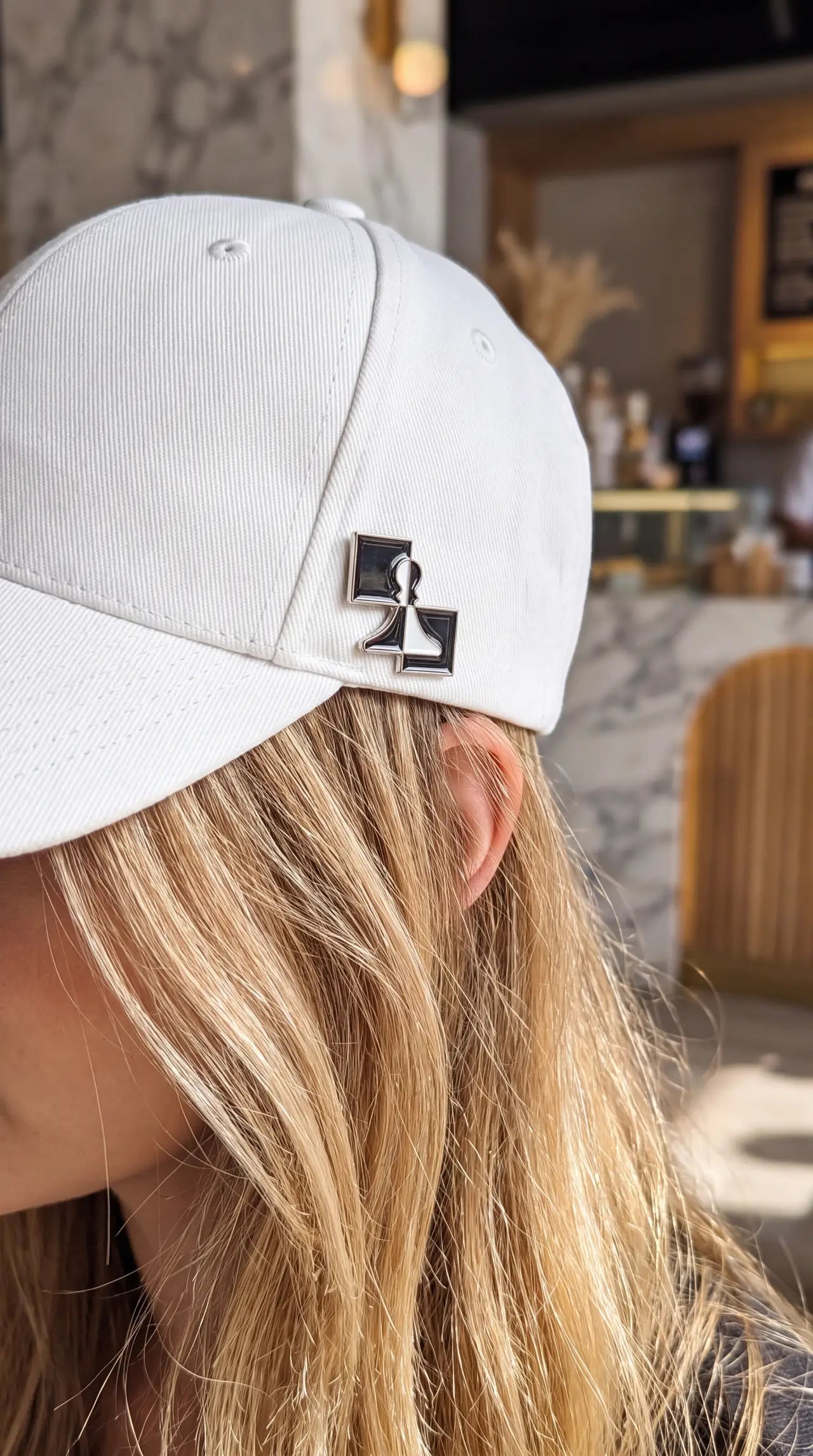
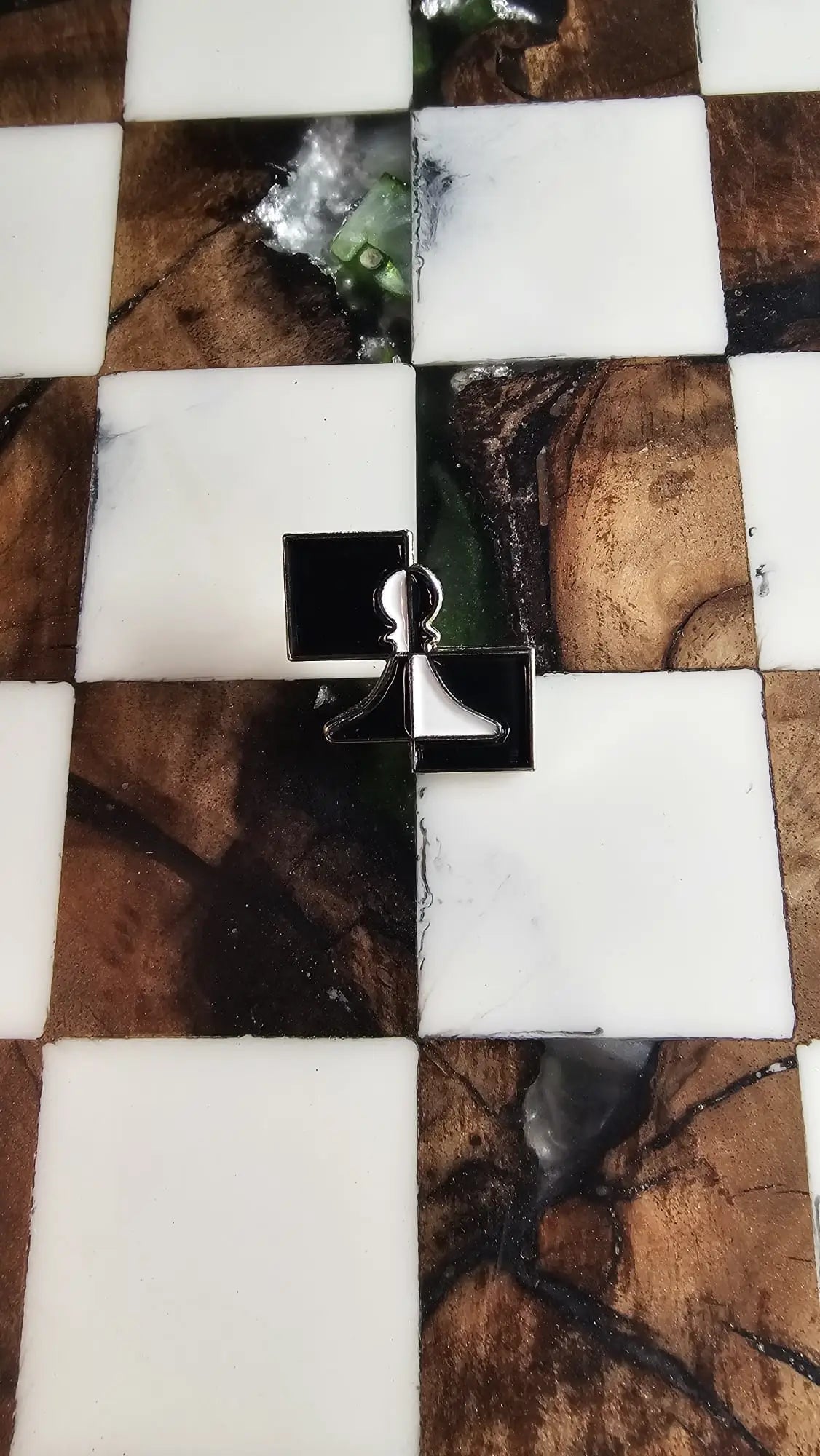
Not everything has to sit on a table to mean something. The Chess Lifestyle Enamel Pin is the smallest object in our collection, and maybe the most personal — a pawn split into black, white, and nickel-finished metal, made to double as a chess lapel pin, a chess backpack pin, or a chess cap pin, depending on where the day takes it.
It came from a simple thought — that someone who already owns a board, a set, maybe even a clock, still has nothing to wear. A wearable chess pin doesn't replace any of that. It just extends it a little further, so the game travels with them even when the board doesn't.
Where a Chess Pin Actually Goes
The pin was never designed for one outfit or one occasion — that's the point of it. Here's where it naturally lives:
Chess Lapel Pin — For a Blazer or Suit Jacket
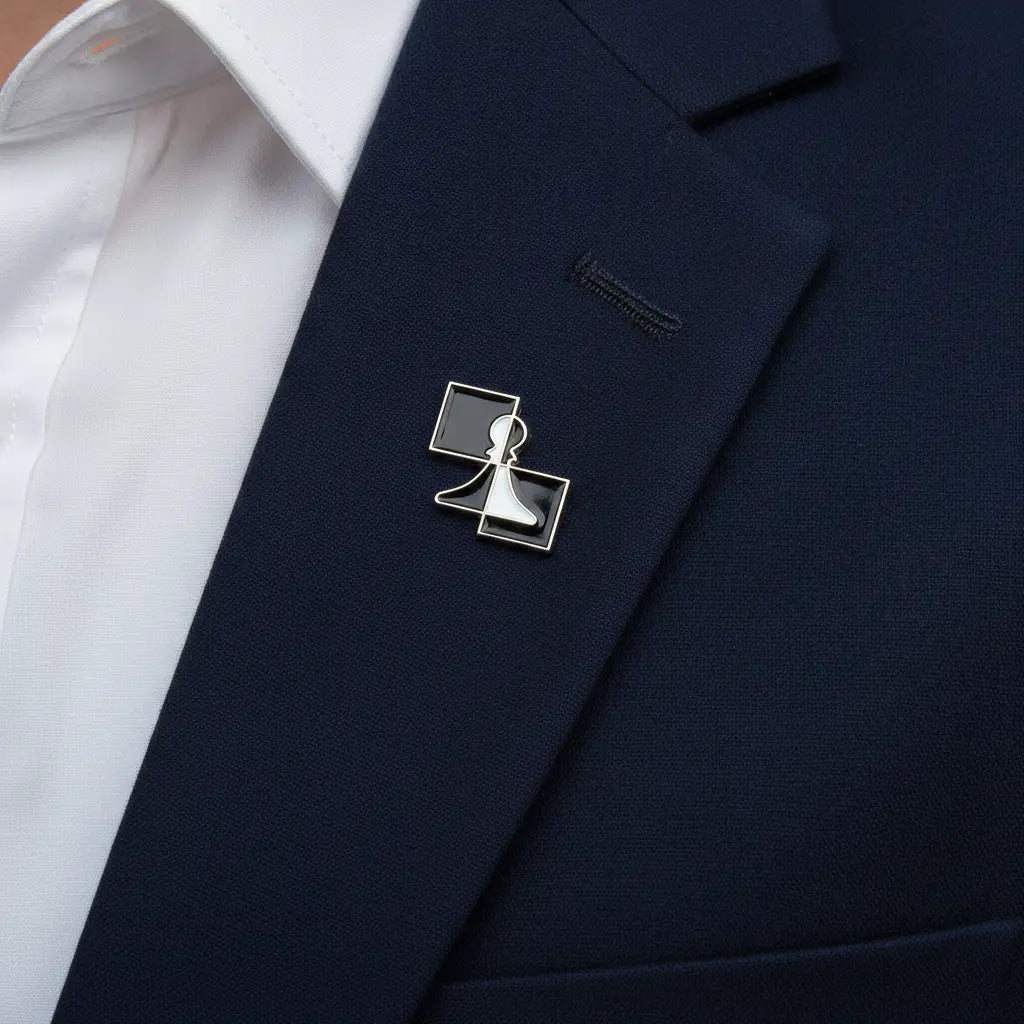
For the moments chess quietly meets formal life — a tournament dinner, a business meeting, a gallery opening — a chess lapel pin sits naturally in the buttonhole or across the lapel of a blazer.
Chess Jacket Pin — For Leather
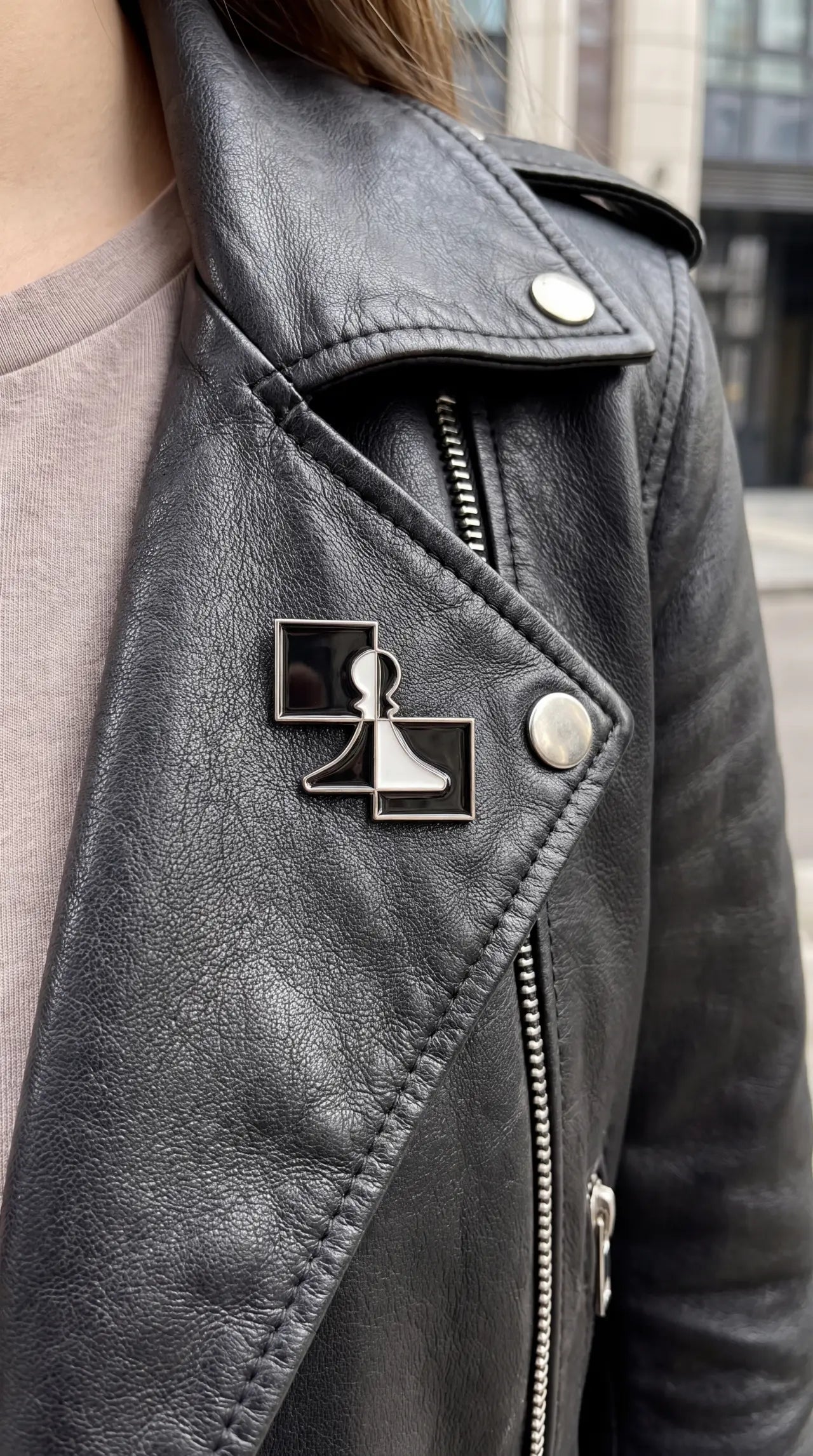
On a leather jacket, a chess jacket pin reads less like a chess symbol and more like a small piece of hardware — sharp against black leather, at home on the street as much as at the club.
Chess Backpack Pin — For Bags and Travel
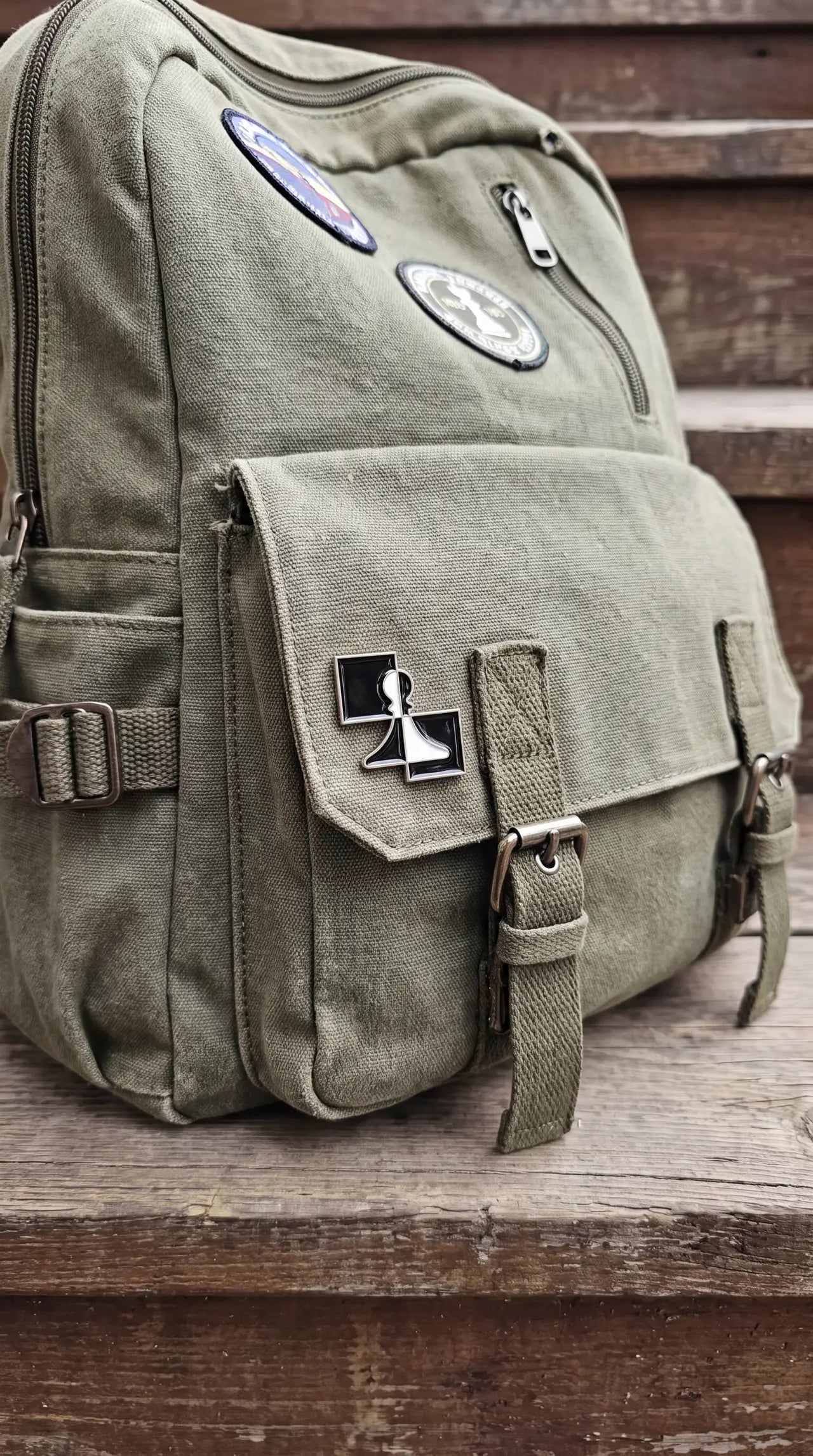
A chess backpack pin is for the version of chess that travels — to school, to a tournament hall, to a coffee shop for a quick game between friends. It clips just as easily onto a strap, a flap, or a front pocket.
Chess Bag Pin — For a Pencil Case or Pouch
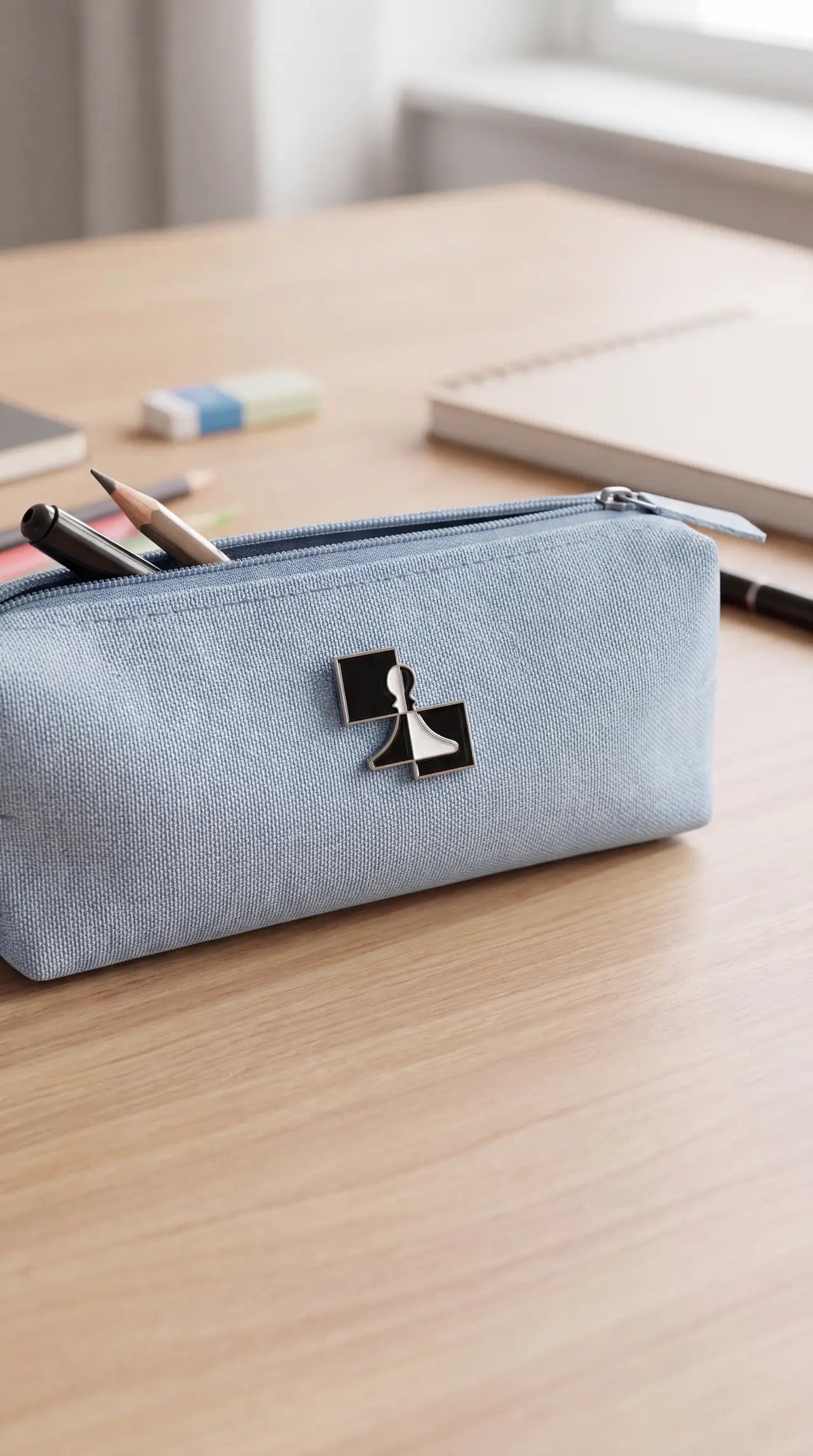
As a chess bag pin on a pencil case or pouch, it becomes a small, almost accidental detail for students, coaches, and anyone whose day includes both notebooks and openings.
Chess Cap Pin — For the Casual Days
Pinned to a baseball cap, it moves to the more casual end of a chess life — the version that shows up to a park game, not a tournament hall.
Or Simply Resting Nearby
On a windowsill, a desk, the edge of a board — for the days it isn't worn at all, just kept close.
None of these are rules. They're just proof that a small wearable chess pin can move through more of someone's day than a board ever could.
Will there be more pins?
Honestly — probably. We're not ready to announce anything, but knowing us, chess as a wearable, everyday thing is a direction we like. More ideas are likely coming. (One thing we can rule out: a version for Crocs. Some lines we're not crossing. 😄)
A Clock That Still Ticks
There's a real difference between a decorative object and one with a mechanism inside it. Our restored vintage mechanical chess clocks — Koopman, Ruhla, Gardé — aren't replicas. They're serviced, wound, and tested to actually run a game, flag drop and all.
We treat these less as gifts and more as small pieces of chess history that happen to still work. A wooden clock case carries decades of games nobody remembers the moves to anymore — which is part of why collectors and casual players both tend to keep them for good.
A Board That Lives on the Wall
For anyone with wall space and an eye for design, a hanging vertical chess board turns the game into something closer to functional art — playable, not just decorative, with magnetic pieces that hold their position between moves and between weeks. It belongs equally in a study, an office, or a living room, and it changes the way a room feels the moment it goes up.
This is usually the piece for someone who has already said, out loud, that they wish they had somewhere to actually show their board — not just store it.
A Trophy That Isn't Really a Trophy
When Judit Polgár presented a handcrafted wooden tray instead of a standard trophy at a tournament in Budapest, it read differently than the usual cup or medal — quieter, but somehow more permanent. That moment shaped how we think about custom wooden trophies now: not as symbolic prizes, but as objects with real usefulness, built to sit on a shelf at home or in a club long after the tournament is forgotten.
Small Objects That Hold a Room Together
Not everything needs to be the centerpiece. Our wooden chess decorations — trays, stands, and smaller sculptural pieces — exist for the corners of a room that aren't the chess corner. Because each one is finished by hand from natural wood, no two are quite identical; the grain and character shift piece to piece, which is less a limitation than the point.
Alongside them, practical pieces like a portable display easel solve a problem a lot of players quietly have: owning a board they love but never showing it properly.
An Engraving That Makes It Someone's
Almost anything in wood — a clock case, a trophy, a board's edge — can carry an engraving: a name, a date, a title won, a club crest. It's a small addition, but it's usually what turns a well-made object into a specific, unrepeatable one. We've engraved trophies for tournaments from Budapest to Saint-Tropez, and the request is nearly always the same: make it theirs, not just chess-themed.
The Idea Behind All of It
None of these objects are meant to replace the board. They're meant to widen it — to let the game exist in the places a person actually spends their time, not just the hour or two they sit down to play. A pin on a jacket, a clock on a shelf, a board on a wall: small proof that chess isn't something you put away when the game ends.
Explore the full ChessboArt collection to find the piece that fits your own chess life.